Aug 10 • Written By Oceania Wellness
Fine Lines and Wrinkles: What Actually Causes Them, and Which Ingredients Have the Evidence
Fine lines and wrinkles are one of the most common skin concerns we hear about, and one of the most confusing to shop for. So here is the simple version: what causes them, and which ingredients actually have research behind them. Everything below focuses on the actives in the Propaira and Dermaceutic ranges we stock.
What causes fine lines and wrinkles
Skin ageing happens in two ways at once. Intrinsic ageing is the natural decline in collagen production that begins in our mid-twenties. Extrinsic ageing is driven by the environment, and ultraviolet radiation accounts for the majority of visible facial ageing, a process known as photoageing [1].
1. Age
From our mid-twenties, skin gradually produces less collagen, the protein that keeps it firm and springy. Fragmentation of the dermal collagen matrix is a central feature of aged skin [1]. This happens to everyone and is completely normal.
2. Sun
This is the big one, especially in Australia. UV exposure breaks down collagen faster than skin can rebuild it, and it is the main modifiable cause of wrinkling [1]. This is why daily sunscreen sits above everything else in this article.
3. Dehydration
Dry skin makes fine lines look deeper than they are. This is the quickest thing to improve, because restoring water content in the upper layers smooths the skin surface [5]. Smoking, poor sleep and stress also contribute over time.
One thing worth knowing: a lot of what looks like fine lines is really dehydration sitting on top of early collagen change. They need different products, which is why a good routine covers both.
The ingredients that work, and the research behind them
Retinol: the gold standard
Find it in: Dermaceutic Activ Retinol 0.5 and 1.0, Propaira Retinol Plus 0.25%, Propaira 1% Retinol Cream.
Retinol is converted in the skin to retinoic acid, which increases cell turnover and supports collagen production. It is the most extensively researched anti-ageing ingredient available without a prescription [1]. A 2025 network meta-analysis of 23 randomised controlled trials covering 3,905 participants found retinol and other retinoids significantly improved fine wrinkles, and rated tretinoin as having the most favourable safety profile of the agents compared [2].
How to use it: start with the lower strength, at night, 2 to 3 times a week, and build up slowly. Mild dryness in the first few weeks is expected and usually settles as skin adapts [1]. Always wear sunscreen the next day.
Newer retinoids
Retinaldehyde and other next-generation retinoids sit closer to the active form than retinol does. A 2025 review of cosmeceutical actives reports that next-generation retinoids show efficacy comparable to tretinoin with improved tolerability, while noting that the studies so far are small and short-term [3].
Vitamin C: the morning protector
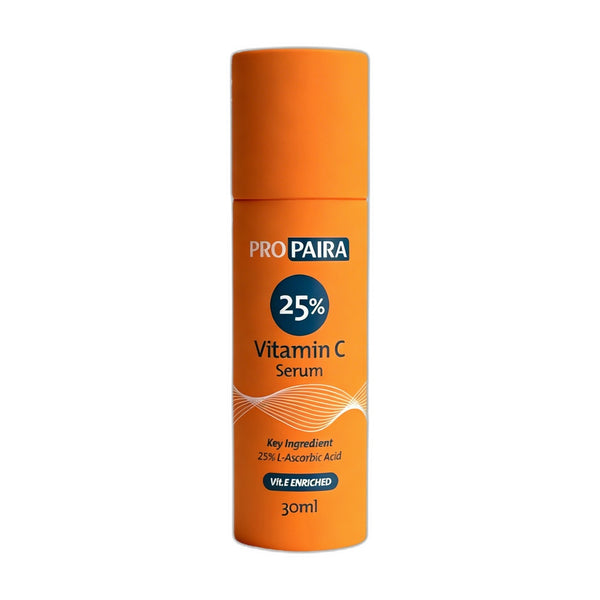
Find it in: Dermaceutic C25 Cream, Propaira 25% Vit.C Serum, Propaira AOX Cream.
Vitamin C is an antioxidant that limits the daily oxidative damage driving collagen breakdown, and it is an essential cofactor for collagen synthesis [6]. A 2023 systematic review of seven randomised controlled trials found that trials measuring skin topography showed treated skin appeared smoother and less wrinkled, with significant lightening of pigmentation, though the authors note long-term use may be needed and the ideal concentration is not yet established [4]. Use it in the morning, under sunscreen.
Hyaluronic acid: the fast fix
Find it in: Propaira Hyaluronic Acid 3.1% Extra Strength Serum.
Hyaluronic acid binds water in the skin, which visibly plumps the fine lines caused by dehydration. Skin levels begin declining from around age 25. A 2022 review of the clinical evidence found topical hyaluronic acid improves hydration, skin quality and the appearance of ageing signs [5]. It is the fastest result on this list, and it makes everything else in your routine look better too.
Peptides: the gentle option
Find it in: Dermaceutic Derma Lift 5.0, Dermaceutic Reveal 4X Eye Serum.
Peptides are short chains of amino acids that signal skin to support its own collagen. A 2025 review describes signal, carrier and neurotransmission-inhibiting peptides as offering multifunctional effects on extracellular matrix remodelling and wrinkle reduction [3]. They are gentle, so they suit sensitive skin and work well on nights off retinol.
Alpha hydroxy acids: the polisher
Find it in: Propaira Anti-Aging Night Cream (15% lactic acid), Dermaceutic Radiance Cream.
Alpha hydroxy acids such as lactic and glycolic acid loosen the bonds between dead surface cells, so skin looks smoother. A 2023 review reports they also stimulate collagen synthesis by activating fibroblasts, while noting that the optimal concentration, pH and formulation are still being established [7]. A good supporting act, not a replacement for retinol.
Your simple routine
Morning: cleanse, vitamin C, moisturiser, SPF 50+.
Night: cleanse, retinol (2 to 3 nights a week to start), moisturiser. On other nights, swap retinol for peptides or hyaluronic acid.
Give it about 12 weeks before judging your results. Consistency beats intensity, every time.
Want faster results?
Home skincare maintains and protects. Professional treatments such as skin peels, microdermabrasion and LED work deeper and speed things up. The two work best together. Not sure where to start? Our therapists offer a free virtual skin consultation and will build a routine around your skin.
Book a free virtual skin consultation
Shop the edit
Everything mentioned above is in one place: Fine Lines & Wrinkles.
References
- Quan, T. (2023). Human skin aging and the anti-aging properties of retinol. Biomolecules, 13(11), 1614. https://doi.org/10.3390/biom13111614
- Lin, L., Chen, X., Liu, C., Wang, Q., Lian, W., Xu, X., Guo, Y., Zhong, H., Zhong, J., Zhao, N., Cheng, W., Shu, P., & Xu, Z. (2025). Comparative efficacy of topical interventions for facial photoaging: A network meta-analysis. Scientific Reports, 15. https://doi.org/10.1038/s41598-025-12597-0
- Crespi, O., Rosset, F., Pala, V., Sarda, C., Accorinti, M., Quaglino, P., & Ribero, S. (2025). Cosmeceuticals for anti-aging: Mechanisms, clinical evidence, and regulatory insights—A comprehensive review. Cosmetics, 12(5), 209. https://doi.org/10.3390/cosmetics12050209
- Correia, G., & Magina, S. (2023). Efficacy of topical vitamin C in melasma and photoaging: A systematic review. Journal of Cosmetic Dermatology, 22(7), 1938–1945. https://doi.org/10.1111/jocd.15748
- Bravo, B., Correia, P., Gonçalves, J. E., Sant'Anna, B., & Kerob, D. (2022). Benefits of topical hyaluronic acid for skin quality and signs of skin aging: From literature review to clinical evidence. Dermatologic Therapy, 35(12), e15903. https://doi.org/10.1111/dth.15903
- Boo, Y. C. (2022). Ascorbic acid (vitamin C) as a cosmeceutical to increase dermal collagen for skin antiaging purposes: Emerging combination therapies. Antioxidants, 11(9), 1663. https://doi.org/10.3390/antiox11091663
- Karwal, K., & Mukovozov, I. (2023). Topical AHA in dermatology: Formulations, mechanisms of action, efficacy, and future perspectives. Cosmetics, 10(5), 131. https://doi.org/10.3390/cosmetics10050131
This article is general information about skincare ingredients and is not personal medical advice. If you have a specific skin concern or condition, please speak with your GP, dermatologist or one of our therapists.